The Best Air Purifiers for Small Apartments and Allergy Season
Room size, filter costs and night-time noise decide whether an air purifier helps. We compare the models suited to flats rather than whole houses.
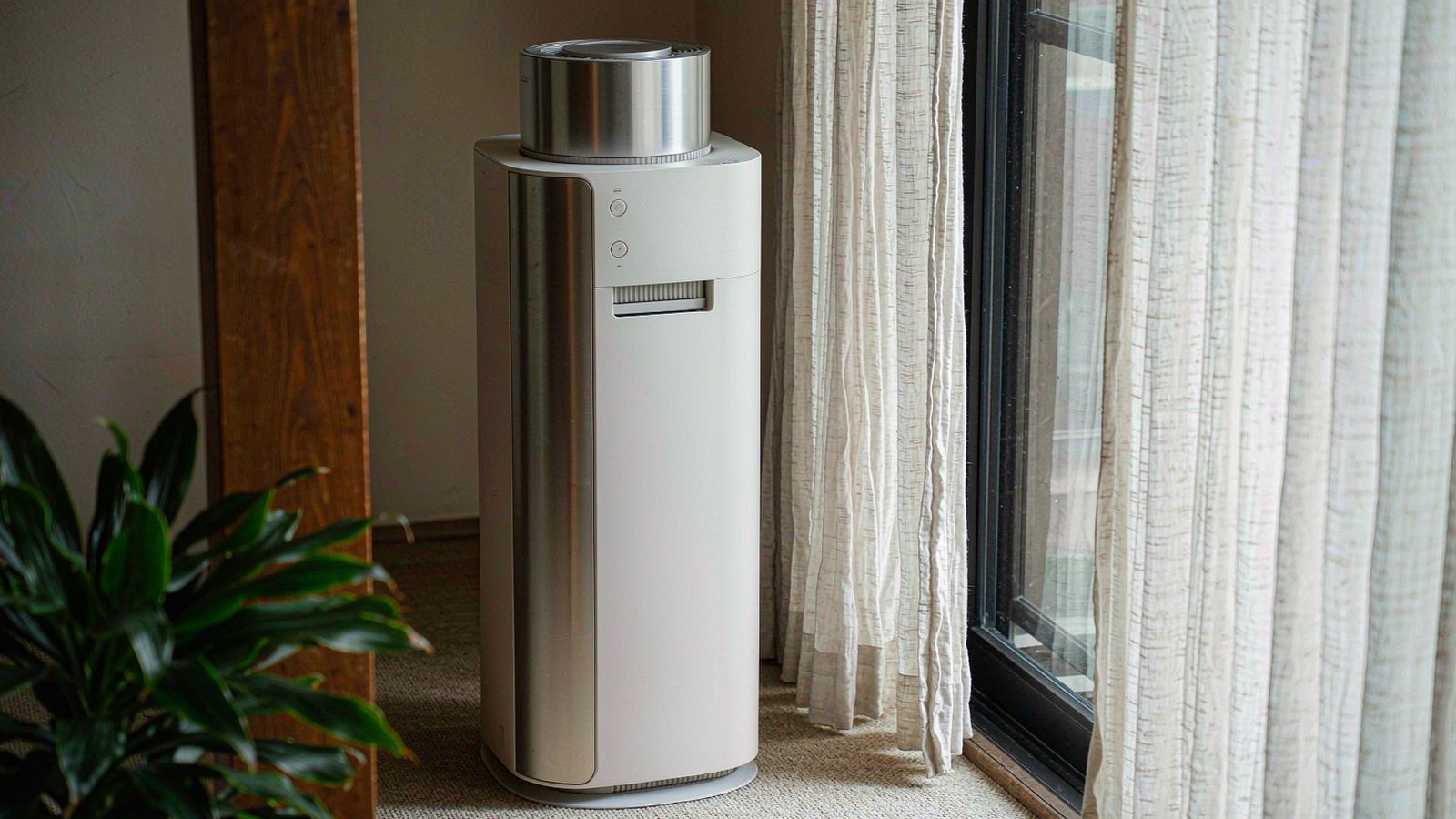
Top picks at a glance
Tap any pick to jump to the full breakdown, or use the link to check the current price.
| Pick | Best for | Check price |
|---|---|---|
| Coway AP-1512HH Mighty Best overall | A living room or a bedroom in a flat where the purifier will run most of the day | Check price |
| Levoit Core 300S Best for a bedroom | Bedrooms and small offices where the purifier runs overnight beside the bed | Check price |
| Winix 5500-2 Best for lower running costs | Anyone prepared to rinse a filter monthly in exchange for lower long-term costs | Check price |
| Blueair Blue Pure 411 Auto Best looking compact unit | Small flats and studios where the purifier will sit in plain sight | Check price |
| Dyson Purifier Cool TP07 Best as a fan and purifier combined | Small flats that need one device to handle summer air movement and filtration | Check price |
| Honeywell HPA300 Best for large rooms on a budget | An open living room where the purifier can be run hard while nobody is sleeping nearby | Check price |
Air purifiers are sold on the promise of cleaner air and bought, very often, because of a specific problem: hay fever that makes spring miserable, a flat on a busy road, a cat, or a downstairs neighbour who smokes. The technology works. What usually goes wrong is the sizing, the placement and the running costs.
A purifier that is too small for the room does very little. A purifier that is too loud never gets switched on at night, which is when many people need it most. And a purifier with expensive filters gets run less and less until it becomes a piece of furniture.
What actually cleans the air in a small flat
Moving air, not just filtering it
Filtration is only half the job. A purifier has to move a meaningful volume of air through the filter, repeatedly, and it has to do so in a room where air circulates. That is why a small unit in a large open living space underperforms even though its filter is perfectly good. Match the unit to the room volume rather than buying the cheapest model with the right filter type.
Filter type and what it removes
A true HEPA filter captures fine particles, which includes pollen, dust, pet dander and smoke particles. A carbon layer handles gases and odours, and it is the part that removes cooking smells and cigarette smoke. Many units combine the two. If odour is your main complaint, the amount of carbon matters and it is often the first thing manufacturers reduce to hit a price.
Filter cost over the life of the machine
The purchase price is the smaller number. Work out the cost of replacement filters and how often the manufacturer says they need changing, then multiply across three years. A cheap purifier with costly filters is an expensive purifier. This is the single most overlooked calculation in the category.
Noise, which decides whether it stays switched on
Most purifiers are quiet at the lowest speed and intrusive at the highest. The setting that matters is the one you can sleep through, and manufacturers usually quote their lowest figure. If the unit will run overnight, prioritise the quiet end of the range over the maximum airflow figure.
Placement and air circulation
Put the purifier where air actually moves rather than in a corner behind a sofa. A unit against a wall with furniture blocking the intake will underperform significantly. Slightly away from the wall, in the path between a door and a window, is usually the best position in a small flat.
The technologies worth avoiding
Simple mechanical filtration has no meaningful downsides. Some other approaches, particularly ionisation and certain electrostatic designs, can produce ozone as a by-product. If anyone in the household has asthma or another respiratory condition, choosing straightforward HEPA and carbon filtration is the conservative choice and removes the question entirely.
What we would not pay extra for
- Air quality displays with detailed charts. Interesting for a week, and you will stop reading them.
- Wi-Fi and app control. Useful for scheduling, never worth a large premium on its own.
- Automatic mode on a very cheap unit. The sensor is usually the first component to be downgraded.
- Aromatherapy functions. You are introducing particles to a machine designed to remove them.
- Very large units for a small room. They are louder, heavier and no more effective at clearing the air you breathe.
Ways to improve the air that cost nothing
- Open windows for a few minutes several times a day. Ventilation dilutes indoor pollution more effectively than any filter.
- Cook with an extractor hood or a window open. Cooking is a major source of indoor particles.
- Keep the unit off the floor and clear of furniture. Intake obstruction is a common and invisible problem.
- Vacuum with a HEPA-filtered vacuum. Cleaning without one lifts dust back into the air.
- Wash bedding weekly in hot water if dust mites are the trigger.
- Stop using scented candles and sprays if your symptoms are respiratory. They add particles rather than removing them.
Choosing in about a minute
- Measure the room and get the volume using a ceiling height of about 2.4 metres.
- Compare against the stated room size and choose one size larger if you are near the limit.
- Check the filter price and interval, then estimate three years of running.
- Listen to the lowest speed if it will run at night, or read what owners say about it.
- Confirm there is no ozone-generating technology if anyone has a respiratory condition.
- Find a spot near air movement before the unit arrives, not after.
When an air purifier is not the answer
If the problem is damp or mould, a purifier will not fix it and a dehumidifier plus ventilation will. If the smell comes from the building itself, sealing and ventilation matter more than filtration. If your symptoms appear only in one specific room and only at certain times, look for the source rather than filtering the symptom.
And if your main concern is general air quality rather than a specific trigger, opening the windows a few times a day will do more for less than any device on this list.
How this guide was researched
We did not measure particulate levels or run filtration tests. This comparison is based on published specifications, manufacturer filter guidance and replacement intervals, noise figures and consistent themes in long-term owner reports, particularly the sensor drift, app problems and filter cost complaints that appear after a year of ownership. Where we describe effectiveness or noise, we are summarising patterns in owner experience rather than results from testing we performed ourselves. Room size, air leakage and local air quality vary enormously, so treat the shortlist as a starting point and check the current price and filter availability before buying.
Our picks in detail
Coway
01 Coway AP-1512HH Mighty
A long-standing reference point in this category, with a proven filter design, reasonable running costs and a quiet low setting. It looks like an appliance, because it is one, and it works.
Best for: A living room or a bedroom in a flat where the purifier will run most of the day
- True HEPA filtration with a separate carbon pre-filter layer
- Multiple fan speeds including a quiet low setting
- Air quality indicator that adjusts fan speed automatically
- Filter replacement indicators on the unit
Pros
- Good balance of cleaning power and noise for a medium room
- Washable pre-filter reduces how often the main filter needs changing
- Straightforward controls with no account required
Cons
- Replacement filters are an ongoing cost that adds up over years
- Bulkier and plainer than the modern alternatives
We may earn a commission from this link. Learn more.
Levoit
02 Levoit Core 300S
Compact, inexpensive and quiet enough to sleep next to, which is exactly the job most people need doing. It will not clear a large open living space, and it is not trying to.
Best for: Bedrooms and small offices where the purifier runs overnight beside the bed
- True HEPA filtration in a compact cylindrical body
- App control with schedules and fan speed settings
- Quiet low speed suitable for sleeping
- Small footprint that fits a bedside table or a corner
Pros
- Very quiet at low speed
- Low purchase price for a true HEPA unit
- Small enough for a small room
Cons
- Underpowered for a large open-plan space
- App connection is not required but is pushed during setup
We may earn a commission from this link. Learn more.
Winix
03 Winix 5500-2
A washable carbon filter that never needs replacing is the unusual part, and it cuts the ongoing cost of ownership meaningfully. The trade-off is a larger, more utilitarian body.
Best for: Anyone prepared to rinse a filter monthly in exchange for lower long-term costs
- True HEPA filter plus a washable carbon filter
- Automatic mode with a particle sensor
- Several fan speeds with a night setting
- Remote control included
Pros
- Washable carbon layer reduces annual filter spending
- Effective on smoke and cooking odours as well as particles
- Automatic mode adjusts sensibly to cooking and dust
Cons
- Large and functional-looking
- Washable filter needs regular rinsing to stay effective
We may earn a commission from this link. Learn more.
Blueair
04 Blueair Blue Pure 411 Auto
A small purifier with a fabric outer cover that looks like furniture rather than medical equipment. Performance is honest for its size, and it suits a studio flat where everything is visible.
Best for: Small flats and studios where the purifier will sit in plain sight
- Compact unit with a washable fabric pre-filter cover
- Automatic mode with a particle sensor
- Low energy consumption on standby and low speed
- Replacement filter design intended for easy changes
Pros
- Attractive enough to leave in a living space
- Washable fabric cover reduces dust build-up on the body
- Very low power draw on low speed
Cons
- Not powerful enough to be the only purifier in a large room
- Proprietary filters limit your options
We may earn a commission from this link. Learn more.
Dyson
05 Dyson Purifier Cool TP07
A purifier that also works as a cooling fan, which matters in a small flat where a separate fan has nowhere to live. Filter replacement costs are the thing to check before you commit.
Best for: Small flats that need one device to handle summer air movement and filtration
- Combined purifier and fan in a bladeless tower design
- HEPA and carbon filtration in a sealed system
- App and remote control with air quality reporting
- Oscillation and multiple airflow modes
Pros
- Replaces a fan as well as a purifier
- Air quality reporting is detailed and useful
- Tower shape takes little floor space
Cons
- Expensive to buy and to keep running with filters
- Fan function is not a substitute for air conditioning
We may earn a commission from this link. Learn more.
Honeywell
06 Honeywell HPA300
A high airflow unit aimed at bigger spaces, sold at a price that undercuts most competitors of comparable capacity. It is loud at full speed and it makes no apology for it.
Best for: An open living room where the purifier can be run hard while nobody is sleeping nearby
- High airflow design intended for larger rooms
- True HEPA filtration with a carbon pre-filter
- Multiple fan speeds with a turbo setting
- Filter change indicators
Pros
- Moves a lot of air for the price
- Effective at clearing a large room quickly
- Widely available replacement filters
Cons
- Loud at the higher speeds
- Large and heavy compared with the compact options
We may earn a commission from this link. Learn more.
The bottom line
Our verdict
For most small flats, the Coway is the safest single purchase: it is quiet enough for a bedroom, effective for a living room and has years of owner experience behind it. If you specifically want something beside the bed, the Levoit is cheaper and quieter. Choose the Winix if you dislike buying filters, and the Blueair if the purifier has to look acceptable in a visible room. The Dyson only makes sense if a fan is also on your list, and the Honeywell is the right answer for a large living space where noise matters less. Whatever you choose, budget for replacement filters, because that cost decides whether you keep running it.
Frequently asked questions
How do I know what size purifier I need?
Start with the room's floor area and a ceiling height of about 2.4 metres to get the volume, then compare it with the room size the manufacturer states for the model. Manufacturers sometimes quote a figure based on a lower air exchange rate, so treat the stated size as a maximum rather than a target. If your room is at the limit, buy the next size up.
Does a HEPA filter remove viruses?
A true HEPA filter captures particles within its rated size range, and some airborne viruses travel on particles of that size. That is not the same as preventing infection. Air purifiers are a sensible supplement to ventilation and hygiene, not a replacement for them, and no purifier should be relied on as a health protection measure on its own.
How often should I replace the filter?
Follow the manufacturer's guidance for the model and adjust for your air quality. A flat on a busy road, a home with pets or a household with a smoker will go through filters faster than the nominal interval suggests. A filter that looks grey, smells stale or has visibly clogged pleats is due for replacement regardless of the calendar.
Do air purifiers produce ozone?
Some technologies, particularly ones marketed around ionisation or certain electrostatic designs, generate ozone as a by-product. True HEPA filtration with a carbon layer does not. If you have asthma or another respiratory condition, choosing a simple mechanical filter design is the more conservative option and avoids the question entirely.
Sources & further reading
- Coway air purifiers — official product and filter pages
- Levoit air purifiers — official product pages
- Blueair air purifiers — official product pages
Facts and availability last checked September 15, 2026.
Keep going
Related guides
 Tech
Tech The Best Noise-Cancelling Headphones for Commuters and Open Offices
We compared over-ear noise-cancelling headphones on published specs, comfort for long wear, call quality and warranty cover — plus which models to skip and why.
 Tech
Tech The Best Robot Vacuums for Homes With Pets and Constant Hair
Pet hair is the hardest test for a robot vacuum. We compare brush designs, self-emptying bases and navigation to find the ones that cope with real animals.
 Tech
Tech The Best Laptops for College Students Who Don't Want to Replace Them in Two Years
A student laptop should survive four years, not two. We compare repairability, battery, keyboard and support policies instead of benchmark charts.