The Best Merino Wool Base Layers for Cold Offices and Cold Cities
We compared merino base layers on fibre micron, fabric weight in gsm, blend ratio, seam placement and wash durability, with honest caveats on each pick.
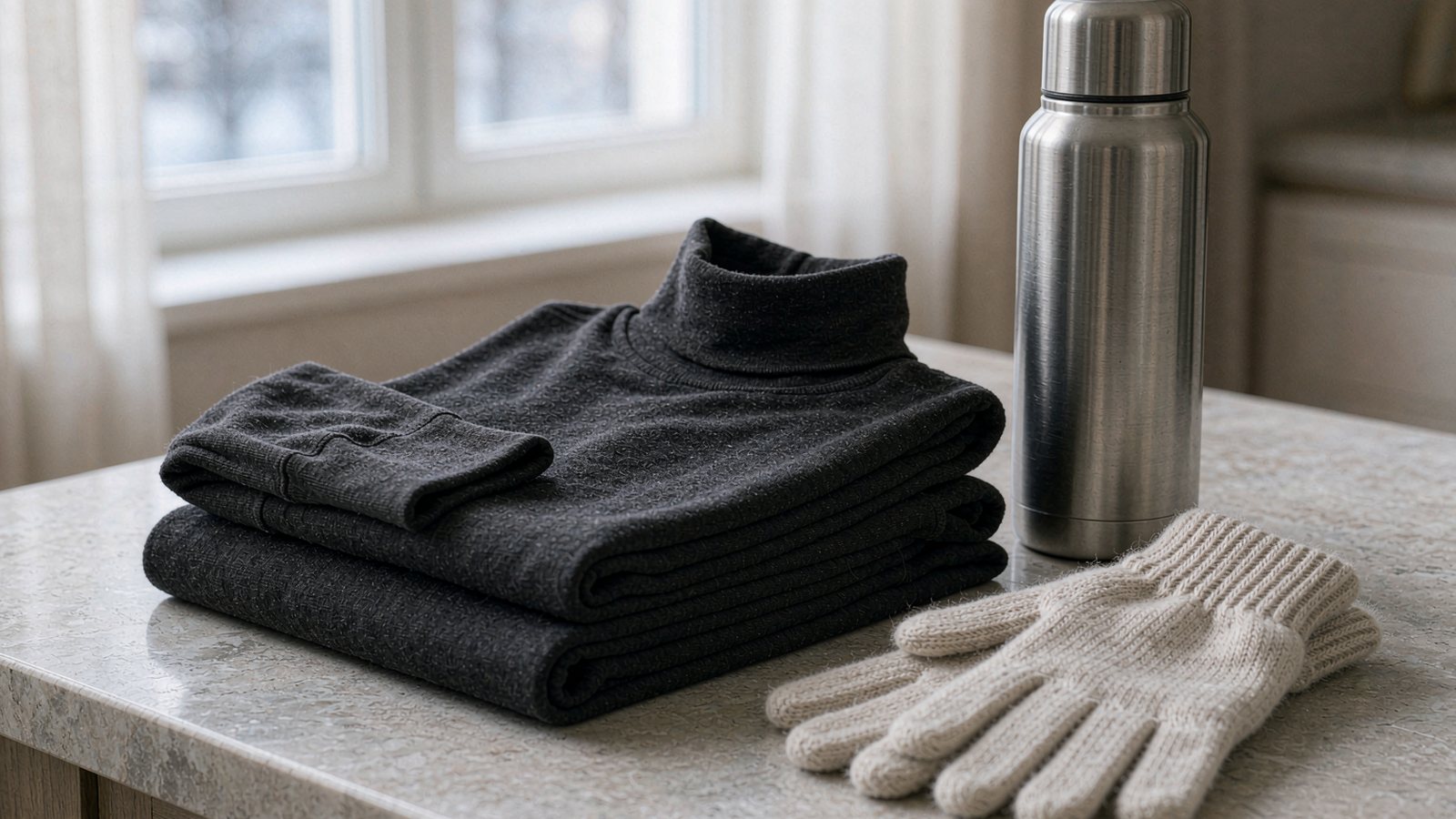
Top picks at a glance
Tap any pick to jump to the full breakdown, or use the link to check the current price.
| Pick | Best for | Check price |
|---|---|---|
| Smartwool Classic Thermal Merino 250 Base Layer Crew Best overall for real cold | Cold commutes, winter walks and unheated rooms below about 10 C | Check price |
| Icebreaker Merino 200 Oasis Long Sleeve Crewe Best for everyday and travel | Office layering and multi-day travel where you rewear between washes | Check price |
| Patagonia Capilene Cool Merino Long Sleeve Shirt Best for active days | Cycling, brisk walking and days that mix being outdoors with being indoors | Check price |
| REI Co-op Merino 185 Long-Sleeve Base Layer Top Best value | A first merino layer, or a second one for the wash rotation | Check price |
| Minus33 Merino Wool Midweight Crew Best budget merino | Cold-weather workwear, snow clearing and anyone who wants merino without specialist pricing | Check price |
| Smartwool Intraknit Thermal Merino Base Layer Crew Best premium construction | Skiers and winter runners who want warmth without bulk at the joints | Check price |
A merino base layer is the only piece of winter clothing that earns its price in a single week. It is thin enough to sit under a shirt in a heated office, warm enough on a platform in February, and it does not smell after Tuesday the way cotton does.
The catch is that merino is sold with almost no standardisation. One brand’s medium weight is another brand’s heavy, and the fibre quality that decides whether a layer itches is buried in a microns figure most product pages never print.
The specifications that decide whether a layer works
1. Fibre diameter in microns
This is the number that determines whether merino feels soft or prickly against skin. Fashion merino can run coarse; performance merino for next-to-skin use typically sits in the fine range. Under about 19 microns feels smooth to most people. If the brand does not publish a micron figure, the hand feel is a lottery.
2. Fabric weight in gsm
Weight splits the category into three useful bands. Around 150 to 185 gsm is a lightweight layer for active days and mild winters. Around 200 gsm is the all-rounder for offices, travel and shoulder seasons. Around 250 gsm and above is proper cold-weather gear that is too warm indoors. Buy by the band, not by the product name.
3. Merino percentage in the blend
Pure merino is softest and best at odour control, and it is also the slowest to dry and the least durable at friction points. A blend with 10 to 30 per cent polyester or nylon improves drying speed and lifespan at the cost of some softness. Both are legitimate choices; the mistake is assuming which one you bought.
4. Seam construction
Flatlock seams lie flat against the skin, which matters when the layer sits under a pack strap or a shoulder bag. Offset shoulder seams move the join away from the top of the shoulder. On a cheap merino layer, a standard overlocked seam will rub within an hour of carrying anything.
5. Care requirements
Most merino is machine washable on a wool cycle now, and some is tumble dry low. What matters is whether you will actually follow that. If the layer goes in a hot wash with towels, it will felt and shrink, and no fibre quality saves it.
What we would not pay extra for
- A four-figure price for a single layer. Beyond a point you are buying branding and a colourway, not warmth.
- Odour-control treatments as the main selling point. Wool already does the work. The treatment is a bonus that fades.
- Body-mapped panelling for commuting. Useful if you ski hard. Irrelevant if your main effort is climbing stairs.
- Zip necks on a first layer. A zip adds a cold spot at the collar and a failure point.
- Dark colours only in the marketing. The colour does not affect warmth, whatever the copy implies.
How to build a three-layer winter system instead of buying one hero piece
- Base layer at 185 to 200 gsm in merino, worn against skin, washed rarely.
- Mid layer in fleece or a lightweight down jacket, doing the insulation work.
- Shell layer, windproof and ideally waterproof, which lets the two below be thinner.
People overbuy base layers and underbuy shells. If you are cold on a commute, the shell is usually the missing piece, not a heavier merino crew.
How to choose in ten minutes
- Decide the band: 185 for layering under shirts, 200 for all-round, 250 for outdoor winter.
- Check the micron figure, or buy from a brand with a well-documented hand feel.
- Check the blend ratio and decide whether you want fast drying or maximum softness.
- Confirm the seams are flatlock and offset at the shoulder.
- Buy one, wear it for a week, then decide whether you want a second.
When merino is the wrong choice
If you sweat heavily and wash after every wear, a synthetic layer dries faster and costs less, and you lose almost nothing. If your winter problem is wet rather than cold, a merino base layer will not keep you dry, and money spent on a proper waterproof shell will do far more. And if you are allergic to wool, no micron count will persuade your skin otherwise.
How this guide was compiled
We compared published fabric weights, fibre specifications, blend ratios, care instructions and construction details, then reviewed consistent themes in long-term owner reports about itch, shrinkage and seam wear. We did not run laboratory tests. Merino pricing swings widely with season, so we point to live listings and say check the current price rather than quoting a number.
Our picks in detail
Smartwool
01 Smartwool Classic Thermal Merino 250 Base Layer Crew
The reference point for a warm merino crew. It is genuinely warm under a shell, and the honest downside is that 250-weight merino is too much indoors once the heating is on.
Best for: Cold commutes, winter walks and unheated rooms below about 10 C
- Midweight merino knit, roughly 250 gsm equivalent
- Flatlock seams positioned away from pack straps
- Thumb loops on the sleeve cuffs
- Machine washable on a wool cycle
Pros
- Warm for its thickness and breathes rather than trapping sweat
- Resists odour across several wears between washes
- Seam placement avoids the shoulder rub that thinner layers cause
Cons
- Too warm for heated offices and public transport
- Higher price than synthetic equivalents of similar warmth
We may earn a commission from this link. Learn more.
Icebreaker
02 Icebreaker Merino 200 Oasis Long Sleeve Crewe
A 200-weight crew that sits in the useful middle: warm enough for a cold office, thin enough to wear under a shirt. The fit is close, so sizing up suits broader shoulders.
Best for: Office layering and multi-day travel where you rewear between washes
- Lightweight merino knit, roughly 200 gsm equivalent
- Offset shoulder seams to reduce chafe
- Flatlock stitching throughout
- Machine washable and quick drying
Pros
- Thin enough to layer under a dress shirt without bulk
- Handles several wears before it needs washing
- Neutral colours that do not read as outdoor gear
Cons
- Not warm enough alone below freezing
- Close cut through the chest and shoulder
We may earn a commission from this link. Learn more.
Patagonia
03 Patagonia Capilene Cool Merino Long Sleeve Shirt
A merino and recycled polyester blend tuned for movement, so it dries faster than pure merino. That blend is also why it feels less soft against skin.
Best for: Cycling, brisk walking and days that mix being outdoors with being indoors
- Merino wool blended with recycled polyester
- Lightweight knit for high-output activity
- HeiQ odour control applied to the fabric
- Fair Trade Certified sewn
Pros
- Dries noticeably faster than 100 per cent merino
- Wicks well under a shell when you are moving
- Holds shape after repeated washing
Cons
- Less soft than pure merino, which some people notice immediately
- The odour treatment fades over time as the wool content does the long-term work
We may earn a commission from this link. Learn more.
REI Co-op
04 REI Co-op Merino 185 Long-Sleeve Base Layer Top
A straightforward 185-weight merino crew at a price that makes a second one realistic. Finishing is plainer than the premium brands, and the collar loosens a little over a season.
Best for: A first merino layer, or a second one for the wash rotation
- Lightweight merino knit, roughly 185 gsm equivalent
- Flatlock seam construction
- Machine washable on a wool cycle
- Sold in men's and women's patterns
Pros
- One of the cheaper ways into real merino
- Thin enough to wear under almost anything
- Backed by a retailer with a generous returns policy
Cons
- Collar and cuffs lose shape sooner than premium versions
- Colour range is limited and rotates
We may earn a commission from this link. Learn more.
Minus33
05 Minus33 Merino Wool Midweight Crew
A midweight merino crew sold at a price that undercuts the outdoor specialists. The fabric is honest merino, though the fit is cut for a boxier frame.
Best for: Cold-weather workwear, snow clearing and anyone who wants merino without specialist pricing
- Midweight merino jersey
- Flatlock seams and a longer body length
- Machine washable, tumble dry low
- Sold in a wide size range including larger sizes
Pros
- Real merino at a genuinely lower price
- Long body length stays tucked under a jacket
- Wide size availability
Cons
- Boxier cut than the trim outdoor brands
- Colour choices are basic
We may earn a commission from this link. Learn more.
Smartwool
06 Smartwool Intraknit Thermal Merino Base Layer Crew
A knit engineered with zones of different density, so warmth sits where you need it and stretch where you move. Whether that is worth the premium depends on how hard you work in it.
Best for: Skiers and winter runners who want warmth without bulk at the joints
- Body-mapped knit with varying fabric density
- Mesh ventilation panels in high-heat zones
- Seamless construction through the torso
- Machine washable on a wool cycle
Pros
- Moves with the body with fewer seams to rub
- Targeted ventilation reduces overheating on climbs
- Retains shape well after washing
Cons
- The most expensive option here
- The body-mapped fit punishes anyone between two sizes
We may earn a commission from this link. Learn more.
The bottom line
Our verdict
Most people should buy the Icebreaker 200 Oasis, because 200-weight merino is the only weight that works in both a cold office and a cold street, and it layers under a normal shirt without bulk. If you are genuinely outdoors in winter rather than walking to a station, the Smartwool 250 is warmer and better built. If you want to try merino without committing much money, the REI Co-op layer is the honest entry point, and the Minus33 crew is the cheapest option that is still real wool. Whichever you pick, wash it cold on a wool cycle and keep it out of the dryer, and check the return window before ordering two.
Frequently asked questions
What merino weight should I buy for a cold office?
Around 185 to 200 gsm is the useful range indoors. It is thin enough to sit under a shirt without changing your silhouette and warm enough for a room at 18 C. Anything in the 250 range will be too warm once the heating is running.
Does merino wool base layer really resist odour?
Better than cotton or most synthetics, yes. Wool fibres absorb odour compounds and release them on washing, which is why a merino layer can be worn several times between washes. It is not unlimited, and layers worn against skin for days will eventually smell, but the interval is meaningfully longer.
How should I wash a merino base layer?
Cold water on a wool or delicate cycle with a wool-safe detergent, then air dry flat. Heat and agitation are what shrink and felt wool, so keep it out of a hot wash and out of the dryer even if the label permits low heat.
Why do merino base layers cost so much more than synthetic ones?
The fibre itself is expensive, and fine merino requires careful handling at the mill. You are paying for odour resistance, better temperature regulation and a softer hand feel. If you only need warmth and never rewear a layer, a synthetic is cheaper and dries faster.
Sources & further reading
- Icebreaker — official merino base layer and fabric weight guide
- Smartwool — official base layer construction and care information
- Patagonia — Capilene Cool Merino materials page
Facts and availability last checked September 15, 2026.
Keep going
Related guides
 Apparel
 The Best Packable Travel Clothing for a Carry-On Only Trip
A carry-on packing guide covering fabric weight, wrinkle recovery, dry time, layering systems and laundry maths, with honest picks and their limits.
 Apparel
 Building a Plus-Size Basics Wardrobe That Actually Lasts
A practical guide to plus-size basics, covering pattern grading, fabric recovery, seam reinforcement and honest sizing charts, with picks at several budgets.
 Apparel
 The Best Sweaters That Don't Pill After Five Washes
We explain why knitwear pills and compare sweaters on fibre length, yarn ply, knit density and blend ratio, with honest caveats on each recommendation.