The Best Storage Bins and Baskets for a Tidy Home
Clear, opaque or woven, and how much weight a stack actually takes. Six storage containers that hold up, plus how to buy the right size first time.
Top picks at a glance
Tap any pick to jump to the full breakdown, or use the link to check the current price.
| Pick | Best for | Check price |
|---|---|---|
| Sterilite 66-Quart ClearView Latch Box Best overall | Closets, cupboards and any indoor storage where you need to see the contents | Check price |
| Rubbermaid Roughneck Storage Tote Best for heavy loads | Tools, camping gear and anything stored in an unheated space | Check price |
| IRIS USA WeatherPro Storage Bin Best weatherproof | Basements, garages and anywhere damp | Check price |
| CleverMade Collapsible Storage Bins Best when space is tight | Small homes, laundry sorting and seasonal storage that gets packed away | Check price |
| Whitmor Woven Storage Basket Best open basket | Open shelving, living rooms and anywhere you want storage to look like furniture | Check price |
| IKEA KUGGIS Box with Lid Best modular shelf storage | Bookshelves, office cupboards and anyone who wants a uniform look | Check price |
Storage containers get bought in a hurry, usually the day before guests arrive or the morning you finally decide the cupboard has to be dealt with. That is how people end up with a shelf of bins that do not stack, cupboards full of boxes that do not fit, and three sizes that never quite line up.
The fix is boring but it works: sort first, measure second, buy containers third. Everything else about choosing between clear plastic, opaque totes and woven baskets follows from what you are storing and where it will live.
Sort before you shop
The classic storage mistake is buying containers to hold things you have not yet decided to keep. You size the box to the current pile, fill it, and then never open it again because you cannot remember what went in.
Empty the space, decide what stays, and only then measure. If a category does not fill a container sensibly, it probably does not need one.
Clear, opaque or woven
Clear plastic suits indoor cupboards and closets. You can see contents without unstacking, and matching sizes make a shelf look deliberate. The drawbacks are visible scratches and brittleness in very cold spaces.
Opaque totes in thicker plastic suit garages, sheds and basements. They hold weight, resist temperature swings and hide ugly contents, at the cost of needing labels on every one.
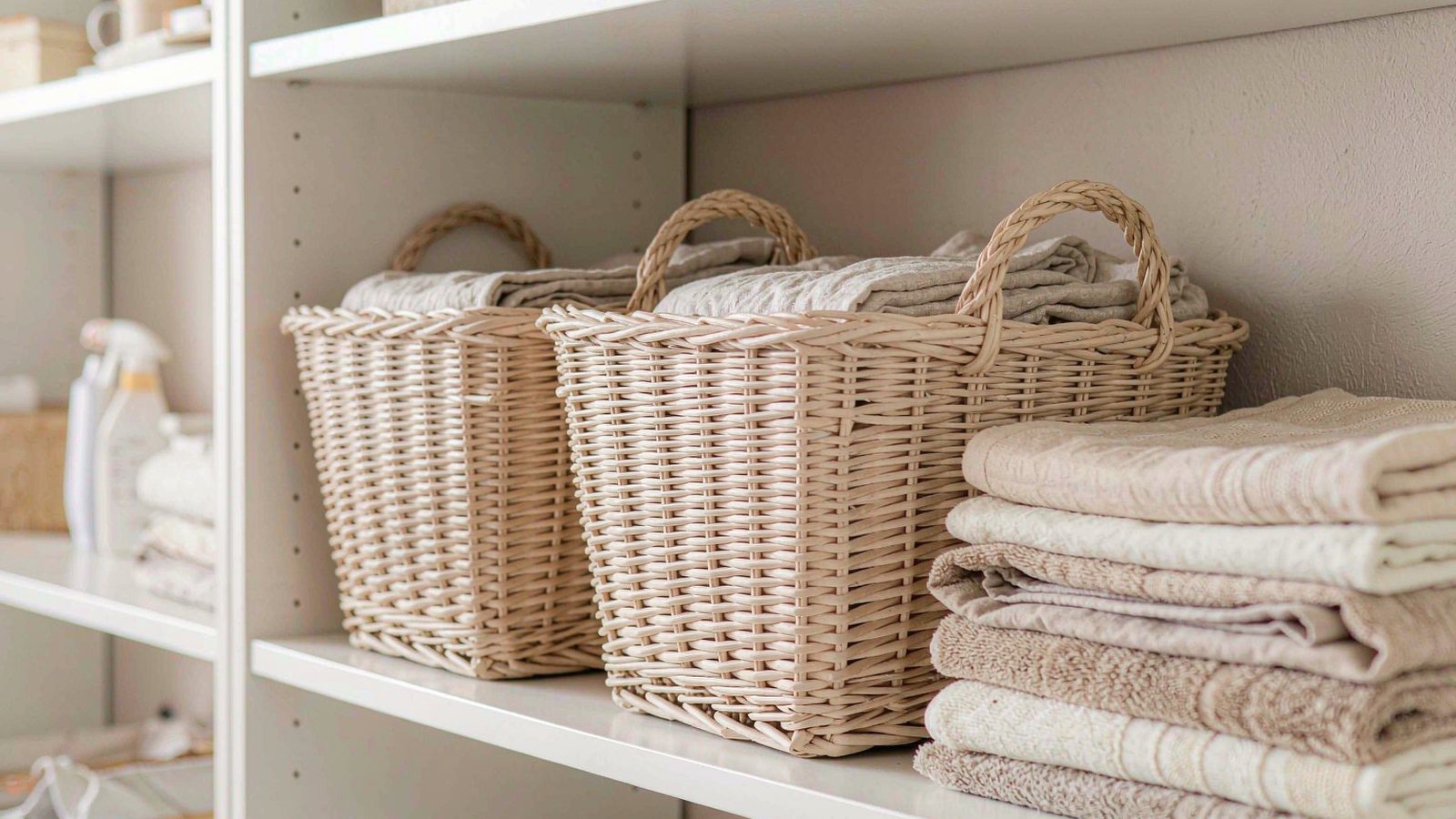
Woven baskets suit open shelving in living areas where plastic looks wrong. They breathe, hide clutter and look like furniture. They also collect dust and cannot be stacked, so they are shelving storage rather than volume storage.
Fabric bins fold flat when empty, which is genuinely useful in a small home, and they crush under anything heavy or stacked.
Fitting the space and the load
Measure the internal dimensions of the shelf or cupboard, not the external ones, and note the height of the opening. A box that fits the shelf but not the doorway is a common and annoying discovery.
Then think about weight. A large bin full of books or tools is heavier than most people expect, and a thin lid will bow when you stack another loaded bin on top. Keep dense contents in smaller, stronger containers close to the floor. Soft items can go up high in light bins.
If the space is damp, choose a gasketed bin rather than a simple snap lid. If the space gets very cold, choose an opaque tote made from thicker material, because thin clear plastic becomes brittle in a freezing garage.
What we would not pay extra for
- Decorative labels and matching sets. Buy one label maker and use it everywhere.
- Wheels on a small bin. They add cost and reduce the usable capacity.
- Stacking claims that ignore weight. Stackability is limited by what is inside.
- Very large single bins. Smaller bins sort better and are easier to move.
- Scented liners. They mask smells that a clean, dry container will not have.
How to choose in ten minutes
- Sort the contents and discard what you will not keep.
- Measure the shelf, cupboard or floor space including the opening height.
- Decide the location indoors, damp or cold, and pick the material accordingly.
- Estimate the weight, then size the container so a full one is liftable.
- Pick two or three standard sizes and use them throughout the house.
- Check the current price and buy the same range again if you need more, so everything stacks.
When containers are the wrong answer
If the cupboard is overflowing because nothing has been thrown out, bins simply allow you to keep more. If the space is damp and cold, a plastic box may trap moisture against the contents rather than protect them. And in a small flat, the cheapest way to gain storage is often to remove furniture and install a shelf, not to add boxes that each take up their own footprint.
How this guide was researched
This roundup is based on published specifications such as stated capacity, material and sealing method, along with care guidance and the patterns in owner reviews after a year of use, where latches break and lids bow. We did not load-test any of these containers. Where we describe how a bin behaves under weight or cold, we are describing the known properties of the material and the repeated experience of owners rather than results from our own testing. Prices change, so every pick says check the current price.
Our picks in detail
Sterilite
01 Sterilite 66-Quart ClearView Latch Box
A clear tote with a latching lid that stacks predictably and lets you see what is inside without opening it. The plastic is not designed for heavy loads in a cold garage, and the latches are the first thing to break.
Best for: Closets, cupboards and any indoor storage where you need to see the contents
- Clear polypropylene body with a latching lid
- Stackable footprint designed to match other boxes in the range
- Published capacity in quarts on the label
- Moulded handles at the ends
Pros
- Contents visible without unstacking
- Latches keep dust out better than a snap lid
- Consistent sizing makes rows look deliberate
Cons
- Latches crack if they are forced in cold weather
- Lids can bow when loaded boxes are stacked high
- Clear plastic shows scratches and scuffs
We may earn a commission from this link. Learn more.
Rubbermaid
02 Rubbermaid Roughneck Storage Tote
A thicker, opaque tote built for garages and sheds, with a lid that resists warping under stacked weight. Opaque walls mean you will be labelling everything, and the sizes are large.
Best for: Tools, camping gear and anything stored in an unheated space
- Thick-walled opaque polyethylene body
- Recessed lid designed to accept another tote on top
- Published capacity in gallons
- Available in several sizes across the range
Pros
- Handles real weight without cracking
- Opaque walls hide ugly contents
- Survives temperature swings better than thin clear bins
Cons
- You cannot see what is inside
- Heavy once full, and there are no wheels
- Larger sizes are awkward to carry up stairs
We may earn a commission from this link. Learn more.
IRIS USA
03 IRIS USA WeatherPro Storage Bin
A gasketed bin intended to keep moisture and pests out, which matters for a garage, a shed or a basement corner. The seal is only as good as the latch pressure, so it is not a dry box for storing something genuinely sensitive.
Best for: Basements, garages and anywhere damp
- Gasket-sealed lid with clip latches
- Clear body so contents are visible
- Stackable design with a stated capacity range
- Handle cut-outs on the sides
Pros
- Seal keeps dust and moisture out far better than an unsealed lid
- Clear walls plus a sealed lid covers both concerns
- Stacks stably when loaded evenly
Cons
- Latches need to be pressed evenly or the seal leaks
- Seal can deform if the box is stored in extreme heat
- Pricier than a basic tote of the same size
We may earn a commission from this link. Learn more.
CleverMade
04 CleverMade Collapsible Storage Bins
Fabric-sided bins that fold flat when empty, so you can keep a set on a shelf and pop them up when needed. They hold soft items well and crush under anything heavy or stacked.
Best for: Small homes, laundry sorting and seasonal storage that gets packed away
- Collapsible frame that folds flat
- Fabric body with reinforced handles
- Sold in sets of two or more
- Lid available on some sizes
Pros
- Stores flat between uses, which is the whole point
- Light to carry when full of soft items
- Cheap enough to buy in quantity
Cons
- Not rigid, so they cannot be stacked when loaded
- Fabric picks up dust and is harder to wipe clean
- Frames can bend if overfilled
We may earn a commission from this link. Learn more.
Whitmor
05 Whitmor Woven Storage Basket
A woven basket for shelves and shelves only, since nothing here is stackable or dust-proof. Baskets hide clutter better than clear bins and suit living rooms where plastic looks out of place.
Best for: Open shelving, living rooms and anywhere you want storage to look like furniture
- Woven construction with a fabric liner on some models
- Integrated handles
- Available in several sizes to suit standard shelving
- Sold individually or in sets
Pros
- Looks intentional rather than utilitarian
- Hides messy contents without needing a lid
- Breathes, so nothing gets musty inside
Cons
- Collects dust and needs vacuuming or shaking out
- Sharp or heavy items can snag the weave
- Cannot be stacked
We may earn a commission from this link. Learn more.
IKEA
06 IKEA KUGGIS Box with Lid
A tidy lidded box designed to fit standard shelving units, which makes a full wall of them look planned rather than accumulative. Sizes are fixed, so you are committing to the range.
Best for: Bookshelves, office cupboards and anyone who wants a uniform look
- Lidded boxes in a graduated size range
- Moulded grip on the lid edge
- Sized to fit common shelving depths
- Recycled plastic in the material mix on some versions
Pros
- Uniform sizing makes shelves look intentional
- Lid keeps dust off stored items
- Cheap to buy in multiples
Cons
- Only fits shelving with matching internal dimensions
- Thin walls flex under weight
- Opaque body hides contents
We may earn a commission from this link. Learn more.
The bottom line
Our verdict
For most homes the Sterilite ClearView latched box is the right default: clear walls, a lid that keeps dust out, and consistent sizing so a closet ends up looking deliberate. Step up to the Rubbermaid Roughneck for garage and shed storage where weight and temperature matter, and use gasketed bins if the space is damp. Woven baskets are the better choice wherever the storage is on display. Check the current price, measure your shelf or cupboard before ordering, and buy containers after you have sorted the pile rather than before.
Frequently asked questions
Should I buy storage bins before or after decluttering?
After, always. Buying containers first means sizing them to things you have not yet decided to keep, which is how people end up with full bins they never open. Sort, discard and measure, then buy for what remains.
Can I stack heavy storage totes?
You can stack the bins, but weight is the limitation rather than the design. Thin lids bow under load, and a heavily loaded bottom bin can crack at the corners. Keep heavy items in short, strong totes at floor level and store light items above.
Do clear bins or opaque bins last longer?
Opaque bins usually last longer in sunlight and cold, because the plastic is often thicker and less prone to becoming brittle. Clear bins are better indoors where you want to see contents. Neither likes prolonged direct sun or a freezing garage.
How do I stop fabric bins from collapsing?
Load them with soft, evenly distributed items and keep them against a shelf wall so the sides are supported. Fabric bins are not structural, so anything heavy or stacked above them will deform the frame. Choose a rigid bin if the contents are dense.
Sources & further reading
- Sterilite — official storage tote product and specification page
- Rubbermaid — official storage tote range and specification page
- IKEA — official KUGGIS box with lid page
Facts and availability last checked September 15, 2026.
Keep going
Related guides
 Home
Home The Best Air Fryers for Two-Person Households
Basket size, footprint and cleaning effort decide whether an air fryer earns its counter. Six models sized for two people, from compact to oven-style.
 Home
Home The Best Blenders for Daily Smoothies and Small Counters
Motor wattage, jar material and blade design decide how a blender handles frozen fruit. Six blenders that suit a smoothie habit and a tight kitchen.
 Home
Home The Best Standing Desks for a Small Home Office
Stability, desktop depth and assembly effort matter more than lift speed. Here is how to pick a height-adjustable desk that fits a small home office.